Monday, June 30, 2008

Growing Sweet Potatoes - underneath those vines, there really are sweet potatoes

I have a sweet potato vine growing in a container in my kitchen window, and I keep wondering if it would actually grown a sweet potato underneath the soil. Perhaps so. From a poster at one of the listservs I am subscribed to, she cites her experience with sweet potatoe vines...and it sounds like it was an unexpected surprise to her to find actual sweet potatoes growing.

I am put off a bit by learning the sweet potato is a cousin to the morning glory vines, and yes, the leaves of the vine do look much like the morning glory vines in my yard. Since I already 'fight' with the spreading morning glory vines that never really are eradicated, but I try to keep them from overtaking our intentional plantings, I'm not sure I would want to generate another aggressive vine spreader with sweet potatoes. So, I will think some about this, how I can grow and keep contained, because I do want sweet potatoes - Yes!

A shout out of thanks to Brenda for sharing her experience (below):

I just took pieces that were sprouting & put them against a chain link fence. The vines grew all over the fencing. Then they branched out all over my garden.. like weeds. When the leaves started to die a little, you could see the potatoes peeking up from the mound at the base of the plant. As I started pulling up the runners, I kept finding more.

They are a member of the morning glory family & the vines act like it... I had one potato that was the size of a coconut!! No special care. Didn't water them any more than the normal grey water from the laundry & whatever water God gave me. No pesticides. A little mulch from the horse stable but nothing special. I harvested more today. Very hardy. Willing to take over the world if you let it.
Read more

Growing Potatoes in Garbage Can (or other similar container)

Okay, I wanted to try this last year, and so another growing season, and I am doing it this year (2008).
From a poster on one of my listservs - the simple explanation and then the detailed explanation with link to site.


We have been growing potatoes in containers for years and it is really easy. You need to put drainage holes in the bottom and broken clay pot pieces to help drain water off the roots to prevent root rot. Add some rich soil (we compost all left over veggies from the kitchen) then plant your potato eyes. As the vines grow cover them with more loose compost and they will keep growing. Web site that explains the process in more detail.


Link to detailed instructions;

How to Grow Potatoes in a Container (Ciscoe's Secrets) --------------------------------------------------------------------------------

Get a clean garbage can or similar container. Plastic works great because it won't rust out. Drainage is absolutely necessary. Drill several 1/2 inch holes in the bottom. It also helps to drill some holes in the side about half-inch up from the bottom of the container.

Fill the container with about 6 inches of good potting soil. Mix in about a handful of osmocote 14-14-14 fertilizer. Osmocote is a slow release fertilizer that will stay active for approximately 2 1/2 months. Organic fertilizers formulated for acid loving plants such as rhododendrons also works well. (Note: After 2 1/2 months with osmocote, or about 1 1/2 months with organic, fertilize with a good water soluble fertilizer such as Miracle Grow about every two weeks according to directions on the label). Place whole seed potatoes in the soil. There should be about 5 inches between potatoes. Cover with an additional inch or so of soil. All potatoes should be completely covered with soil. Water the spuds in.

The potatoes will begin to grow. When the vines reach 4 inches, cover all but 1 inch with compost or straw. I like to use compost, because it is easy to reach in to pick potatoes. Every time the vines grow another 4 inches, keep covering all but the top inch. Eventually, the vines will grow out of the top of the container. It is a good idea to stake up the vines so they don't fall over and brake. Place 4 bamboo or wood stakes (one in each corner) and tie the vines to the stakes with twine. By now the whole container will be filled with compost. Soon the vines will flower. Not long after that, the vines will begin to produce potatoes all along the vines that are covered with compost in the container. Once they have become big enough, you can reach in and pick a few for dinner any time you want. These spuds are called "new potatoes." They won't keep long in the fridge, so pick-em and eat em. After the vines die back at the end of summer, the potatoes remaining are storing potatoes. You can harvest and store them as you normally would. These will keep well as long as they are stored in a dark, cool, and relatively dry location.

One last note: take care to provide adequate water. You don't want to drown the plants but it's also important the soil at the bottom never dries out. In late summer spuds may need to be watered on a daily basis. Use a watering can to water to avoid wetting the foliage. I found that keeping the containers in an area with morning sun exposure prevents the soil from drying out too rapidly and still allows enough sun for a bumper crop.

This method of growing spuds is really fun. You get lots of them without using much space, and it amazes visitors to your yard. Last year I harvested 35 large Yukon Gold and 55 good sized Peruvian Blue potatoes. Great served with brussels sprouts!
Read more

Epsom Salts - Nutrient for flowers and plants

entry from the Tacoma News Tribune 'Get Growing' blog


Alert! This just in from the Epsom Salt Council. Could it possibly be true?

Just as “Milk does a body good,” Epsom Salt may be one of the most perfect nutrients for flowers and plants. And mid-to-late spring is the ideal time to nourish the soils and roots of your favorite foliage and flowers with this inexpensive and easy-to-use compound. According to the Epsom Salt Council, research indicates Epsom Salt can help seeds germinate; make plants grow bushier; produce more flowers; increase chlorophyll production; improve phosphorus and nitrogen uptake; and deter pests, including slugs and voles.

Anyone used Epsom salt? What did you think? If you haven't tried it, but want to, the Epsom Salt Council recommends these amounts:

Shrubs (evergreens, azaleas, rhododendron): 1 tablespoon per 9 square feet. Apply over root zone every 2-4 weeks.

Lawns: Apply 3 pounds for every 1,250 square feet with a spreader, or dilute in water and apply with a sprayer.

Trees: Apply 2 tablespoons per 9 square feet. Apply over the root zone 3 times annually.

Garden Startup: Sprinkle 1 cup per 100 square feet. Mix into soil before planting.

Roses & Tomatoes: Use 1 tablespoon per foot of plant height per plant; apply every two weeks.

For more details, click here.

UPDATE: WSU professor Linda Chalker-Scott has written an interesting article that takes a skeptical look at using Epsom salt in the garden. Click here to read.
Read more

Sunday, June 29, 2008

Slideshow - photos over the years

Here is a slideshow that in photos chronicles some elements of our lives since we moved to Pacific County eight years ago.


Windows Live Spaces
Read more

What we did, what we do now

Sweetie made this blog some time back, and it has been sitting idle as long. We intended to partner blog and were using this particular blog as a vehicle to chronicle some elements of living our life in this wonderful treasure of a hamlet called Bay Center (named so because it is a peninsula that juts out into the center of Willapa Bay). We didn't do what we intended with this blog. Some years have passed and elements of our life and activities together are reflected in bits and pieces spread out amongst our other blogs.

It would be a bit time consuming to capture the last five years of our life living here in this village on the bay into one blog entry, so I won't try. As we move on with posting to this blog about our lives now, likely some of our past activities will show themselves in our future posts together.

He is five years to retirement, and I 'retired' a little earlier - May 2003 - but since I only put in sixteen of the required twenty years, I'm not going to be receiving any kind of a retirement pension. Thus, I am not officially 'retired'. We are trying to figure out how (if)our income in retirement will meet our daily needs. We used the rules we grew up with as the basis for our retirement, but we can see those rules have become antiquated and outdated for these tumultuous economic times.

So in between our intense efforts and activities to speak out as military family with loved ones deployed in Iraq (see more on our activism at one of my blgs, Dying to Preserve the Lies), there have been some other things we do in our daily lives besides activism. Although it has taken me about the last year to clear my head a bit from the intensity of the previous five years of activism, enough to see that it became so all consuming for me, therefore for us, maybe we are finding some balance in our lives now. Looking out at the horizon, there are new challenges for all of us ahead in these difficult times with the looming oil/food/economic crisis. As we post to this blog, we will be addressing our efforts at how we are trying to be somewhat prepared for an uncertain future.

Recognizing that we don't have the survival skills of our ancestors, we are trying to learn a thing or two about a thing or two. Learning about food management is one of several of our current shared focus - growing our own food, harvesting, preserving what we grow - and that is a large enough chunk to bite off as the peripheral topics that accompany it become their own kind of challenges, ie, making a root cellar.

I think because it is something we CAN do, it helps us to feel like we are attempting to do something concrete in the face of knowing that the wolf is at the door. We have spent a goodly amount of the last five years being messengers, and it feels good and right to turn attention now to spending less time messengering, and more time doing. Amen.
Read more

Independence Day Challenge 2008 - A Food Management Challenge

I'm pleased to have found this great challenge and it is a challenge - Independence Day Challenge 2008 - at Casaubon's Book blog. The blog is full of useful information and worth a look. We (husband and I, oh and our dog and cat) are already into our efforts of trying to learn how to take care of ourselves (primarily feed ourselves) as the oil/food/economic crisis continues. And we recognize we will fall seriously short in our efforts unless we learn the skills and make them part of our daily habits.

Much of the blogging that I've done to date has felt more like 'heed the warnings' sort of messengering. But I think the 'warnings' now are coming from many messengers, and I want to change the direction of my blogging efforts.

With that in mind, I'm liking what I'm seeing in taking the Independence Day Challenge 2008. It seems like good practice to get in better shape for food management challenges headed our way.Read the details at Casabon's blog - Independence Days; My First Challenge. Simply stated --

That means in each day or week, try to:

1. Plant something.
The idea that you should plant all week and all year is a good reminder to those of us who sometimes don’t get our fall gardens or our succession plantings done regularly. Remember, that beet you harvested left a space - maybe for the next one to get bigger, but maybe for a bit of arugula or a fall crop of peas, or a cover crop to enrich the soil. Independence is the bounty of a single seed that creates an abundance of zucchini, and enough seeds to plant your own garden and your neighbor’s.

2. Harvest something.
From the very first nettles and dandelions to the last leeks and parsnips dragged out of the frozen ground, harvest something from the garden or the wild every day you can. Be aware of the bounty around you realizing that there’s something - even if it is dandelions for tea or wild garlic for a salad - to be had every single day. Independence is really appreciating and using the bounty that we have.

3. Preserve something.
Sometimes this will be a big project, but it doesn’t have to be. It doesn’t take long to slice a couple of tomatoes and set them on a screen in the sun, or to hang up a bunch of sage for winter. And it adds up fast. The time you spend now is time you don’t have to spend hauling to the store and cooking later.

4. Prep something.
Hit a yard sale and pick up an extra blanket. Purchase some extra legumes and oatmeal. Sort out and inventory your pantry. Make a list of tools you need. Find a way to give what you don’t need to someone who does. Fix your bike. Fill that old soda bottle with water with a couple of drops of bleach in it. Plan for next year’s edible landscaping. Make back-road directions to your place and send it to family in case they ever need to come to you - or make ‘em for yourself for where you might have to go. Clean, mend, declutter, learn a new skill. Independence is being ready for whatever comes.


5. Cook something.
Try a new recipe, or an old one with a new ingredient. Sometimes it is hard to know what to do with all that stuff you are growing or making. So experiment now. Can you make a whole meal in your solar oven? How are your stir-fried pea shoots? Stuffed squash blossoms? Wild morels in pasta? Independence is being able to eat and enjoy what is given to us.

6. Manage your reserves.
Check those apples and take out the ones starting to go bad and make sauce with it. Label those cans. Clean out the freezer. Ration the pickles, so you’ll have enough to last to next season. Use up those lentils before you take the next ones out of the bag. Find some use for that can of whatever it is that’s been in the pantry forever. Sort out what you can donate, and give it to the food pantry. Make sure the squash are holding out. Independence means not wasting the bounty we have.


7. Work on local food systems.
This could be as simple as buying something you don’t grow or make from a local grower, or finding a new local source. It could be as complex as starting a coop or a farmer’s market, creating a CSA or a bulk store. You might give seeds or plants or divisions to a neighbor, or solicit donations for your food pantry. Maybe you’ll start a guerilla garden or help a homeschool coop incubate some chicks. Maybe you’ll invite people over to your garden, or your neighbors in for a homegrown meal, or sing the praises of your local CSA. Maybe you can get your town to plant fruit or nut producing street trees or get a manual water pump or a garden put in at your local school. Whatever it is, our Independence days come when our neighbors and the people we love are food secure too.


Sharon does have one of those challenge buttons at her blog and provides the html code. I couldn't seem to get the html code to work so don't have the button on this blog -- yet. But I will make weekly reports, I think, about how I'm handling my Independence Day Challenges.
Read more

Thursday, June 26, 2008

Slideshow of family photos

Dropping in a slideshow of some family photos I had saved online over the years. Weddings, newborns, get togethers, and our life together in Bay Center.


Windows Live Spaces
Read more

Saturday, June 14, 2008

Give an Hour - Free mental health counseling to US Military personnel and families

Give an Hour is a non-profit organization asking mental health professionals nationwide to literally give an hour of their time each week to provide free mental health services to military personnel and their families.

This is 'news' to me, something I hadn't heard about yet, and I wanted to do my small part in helping to promote it as a resource. I'd like to give a shout out to visit their website to learn more about Give an Hour. The material and informtion at their website is well organized and self-explanatory.

I learned of Give an Hour in reading at diary at Daily Kos - jimstaro, a member of Veterans for Peace, that also has a brief video Helping warriors find peace of mind , which gives a bit of explanation about the concept of the organization, Give an Hour. The video features U.S. Army Col. James Bradley, Chief of Pyschiatry, at Walter Reed Medical Center making the statement that 'really what we are dealing with is normal reactions to abnormal circumstances'. the video also features Dr. Barbara Romberg, Founder Give an Hour. It is useful to both take a look at the short video, and then take a longer look at the Give an Hour website for additional and concrete information.

At a more local level, here in Washington state, I recently encountered a non-profit organization, The Soldiers Project Northwest, which is a group of mental health care providers in Washington is offering free help to Iraq and Afghanistan veterans and their families who either can’t or don’t want to go through traditional channels for care. The Soldiers Project Northwest is a chapter of and modeled after a similar effort in Los Angeles, The Soldiers Project, where volunteer therapists since 2004 have seen clients without charge for help with their war-related problems.
(Read more at article, A New Source of Mental Health Care, for veterans in Tacoma News Tribune)


At a personal experience level, my son-in-law is deployed in Iraq again, in his second 15 month 'stop-loss' extended deployment. He will have 30 months in Iraq, but it is a higher number of months that he is away from his family as there is a 3 month lead in before he deploys, where he is away from his family training 'down-field' before he deploys. And then even when he is home, there is the ongoing training with a 'down-field' month of training about every quarter.

So overall he will have been absent from his family (wife and three children - my daughter and grandchildren) for about 40 months or more of 72 months since the war in Iraq was initiated. In this second deployment he is struggling with the fullness of the reality of it all - combat, extended absence from his family. My daughter is also having a more difficult time with him gone in this deployment. These long absences take their toll on both of them.

Their marriage continues to stand strong, but the absence is getting to both of them. The little ones, who are now 6 and 7 were only 1 and 2 when he left for the first deployment, so for most of their formative years, he has been gone in deployments in Iraq. He has stated how aware he has become of how much of their growing up years he has missed. These are years he and they can never get back. (As an aside, I have to question how the supposed 'family values' party can call their values 'family values' when they support this war and the impact it has on families on all sides.)

I also well remembered the Vietnam era, retuning troops with PTSD phenomenon, which actually gave us the name PTSD - previously named Battle Fatique or Soldier's Heart (see Frontline 'The Soldier's Heart'). I thought our country also remembered, and that what is well known in the professional mental health industry would have mental health therapists stepping up to the plate, knowing what we could expect with returning troops. I rather thought, perhaps erroneously, it was kind of a 'civilian duty' during time of war.

I'm so pleased to see the formations of these kinds of organizations reaching out to offer professional therapy help to military and their families
Read more

Thursday, April 24, 2008

Projects; Reusing mis matched socks

How to Recycle Your Socks

from wikiHow - The How to Manual That You Can Edit

You've just cleaned out your drawer, and in front of you is a huge pile of old, holey, mismatched socks. You're thinking about throwing them away, but that's just wasteful. Here are some great ways to recycle those socks - perhaps you never realized just how useful socks can be beyond wearing them!

Steps


  1. Make a dust rag. Slip the sock on your hand. Dampen it with water or a furniture polish and clean away! Socks are good for furniture, window sills, computer screens, floor spills, handles, and blinds.
  2. Polish your shoes. Old socks make great shoe polishers. You can also use them to shine the shoe after polishing.
  3. Make a homemade hacky sack. A hacky sack is a small cloth ball filled with small beads or beans. Cut off about half the top part of a long sock and about three quarters for a short sock. Fill the sock with dried rice, dried peas, or beads. Sew the opening together in a ball shape.
  4. Make a drink cozy. This requires a long sock. Cut the whole top of the sock off. Slide it over a bottle to keep the bottle cool (insulated). A shorter sock can be used for cups and cans.
  5. Make a coin purse. You'll need an anklet-sized sock for this project. Use the whole sock and decorate this sock bag with sequins, beads, glitter, or any other decorative items you have about the house. Sew a strip of fabric onto the top for a handle, or a zipper across the opening.
  6. Make sock dolls. You can also make a sock monkey or a sock puppet. Fill the sock with beans or rice. Glue, sew, or draw on eyes, nose, and mouth. Cut up another old sock into strips and sew on for hair.
  7. Keep a pet's paws warm. If you have an ailing animal that is suffering from the cold, old socks can be helpful in keeping their paws warm. If you are a wildlife rehabilitator, another great use for socks is as temporary pouches for baby animals in your temporary care, such as baby joeys, bats, or possums. Any creature that likes a springy and soft warm place to snuggle into will appreciate this and you will be able to hang the sock up if it is a strong old woolen type, to mimic mother animal's pouch.
  8. Make muscle relaxing packs. Fill with rice or wheat and sew up the open end. Place in the microwave with a glass of water to heat for 1 minute. Hang around your neck or place on other sore muscles for instant relief. (Note: Always include the glass of water to provide moisture or the pack can catch on fire if it dries out too much after repeated use.)
  9. Make a hard-to-reach cleaning stick. Get a ruler (the longer the better) and slip the sock over the end. Attach with an elastic band or staple. Use this to run underneath stoves, fridges, and other hard to reach places. The sock-covered ruler will return lots of fluff and dust and it is easy to wash the sock after each use.
  10. Make horse bandages. Cut the foot off the end of a long sock and make a horse bandage. Smaller socks might be suitable for smaller animal bandages on dogs or cats (try children's socks).
  11. Make garden soap holders. Gardening can be messy and dirty. Pop a soap bar into the bottom of an old sock and tie a knot around the soap part of the sock. Leave the long part of the sock for tying onto a faucet in the garden. It will be ready for you whenever you need to clean up outside after a gardening session.
  12. Sew a quilt or a sock rug. You will need to find the instructions on how to do this (do an internet search) but it is possible to make quilts and rugs from old socks. This gives them extra utility for years to come and is especially neat for those socks with cute patterns or designs that you can't bear to part with.
  13. Wash the car or bike. A sock over the hand and you have an instant cleaning cloth that is soft enough for the car body or bike frame. Use one for washing and one for buffing.
  14. Make draft protectors. Fill a long sock (knee-high is good) with beans, rice, or other spare filling that you have around the house. Sew or tie up one end and you have an instant, rounded draft protector. If you want to enhance its appearance, add eyes, nose, mouth and maybe feelers or whiskers - whatever sort of animal that you can imagine.
  15. Add a tennis ball. The purpose of adding a tennis ball to an old sock can be twofold:
    • Make a back and neck soother. Tie the tennis ball inside the end of a long sock. Taking the long end of the sock, toss the sock over your shoulder so that the ball lands on your back. Stand against a wall and lean against the sock and ball. Rub your back up and down against the ball that is squeezed into the wall and it will massage away aches and pains from sport, sitting too long at the computer or any other activities that may have caused back tension. Use a shorter sock for a neck massaging version.
    • Make a dog pull-toy. In the same way, place the tennis ball in the end of the sock and tie around it. Take the long end of the sock and tempt your dog to take it. If your dog is playful, a fun tug-of-war is likely to ensue. See Warnings below.

  16. Make a sock jump rope. All you have to do is tie about 15 or so long socks in a line and you have a neat jump rope! It's also fun to use different colored socks!
  17. Make a dog toy.
    • Take a dog's chew bone and put it in an old sock. You can bunch it into a ball and play fetch. The dog will have fun trying to get the bone out. See Warnings below.
    • Put an empty plastic water bottle in the sock, tie the end and give to dog. Many dogs seem to love crunching water bottles and the sock stops the plastic from decorating your yard.

  18. Save them for moving day. Place valuable glasses, or knick knacks inside the sock sole and wrap the higher part around the bottom. This will give more protection. Add a tag on the outside of the sock, so you remember what is inside. Place in a moving box or inside one of your dresser drawers.
  19. Make potpourri holders. Place potpourri inside and sew closed. Great in closets and dresser drawers. Gives off a gentle smell for months.
  20. Make a cat toy. Pour Catnip into an old sock and tie it off. Cats love them. Just watch for holes.
  21. Start a new trend. Wear two socks of different colors. Make sure that each color matches your outfit. It'd probably work well with Harajuku style. Art from the Middle Ages c. 1300's ("Les Tres Riches Heures de Duc du Berry--January) shows that royalty and the neighborhood landowner wore socks or stockings of different colors. They were actually very fashionable.
  22. Make Fingerless gloves. Cut a hole in the heel and cut off the toe of the sock. Stick your thumb in the heel hole and your fingers out the toes. If you want you can tuck under the raw edges where you made the cuts or sew a simple hem.
  23. Make a Rifle Rest Bag. Simply fill a tube sock with rice and tie off the open end. Use it to steady the fore-end of your rifle at the shooting range. Make several and put them under the fore-end and the stock to improve your accuracy.


Tips


  • You don't have to use only these ideas - use your imagination as well!
  • Always launder socks before using them in any of the projects.
  • Always sew up any holes in old socks that are destined for any projects required filling. Obviously if you don't, the filling will pour straight out of the hole.


Warnings


  • Using a sock as a dog chew toy poses two dangers: it might teach your dog that all socks are chew toys, so try to ensure that it does not look like a sock before you let your dog use it; and ingested socks can cause bowel blockage, a serious concern for your canine companion, so if the sock becomes damaged, you should take it back.

  • Young kids will probably need an adult to help with the ideas that involve sewing.
  • Be careful when microwaving a sock containing rice, beans, or deer corn. Microwave it for no more than two minutes, and monitor it, as there is a remote chance that it may overheat and catch fire. To ensure that this doesn't happen, always place a mug full of water in the microwave along with the sock.


Things You'll Need


  • Old socks
  • Dried peas, rices or beads
  • Yarn, markers, sequins, or other decorative items
  • Needles and thread
  • Large cardboard box to store your odd and old socks - to avoid the temptation to toss them away
  • Potpourri
  • Tennis ball


Related wikiHows


Article provided by wikiHow, a collaborative writing project to build the world's largest, highest quality how-to manual. Please edit this article and find author credits at the original wikiHow article on How to Recycle Your Socks. All content on wikiHow can be shared under a Creative Commons license.

Read more

Project; Making slippers from jean pockets

How to Make Jean Slippers

from wikiHow - The How to Manual That You Can Edit


Steps


  1. Slide your feet into the back pockets of the jeans. The pockets should fit your feet comfortably. Cut the pockets off and trim any extra fabric from the inside.
  2. Measure the length of the bottom of your foot and add 1 inch. Measure the width of your foot and add 1 inch. Using these measurements, draw a rectangle on tracing paper. Cut it out and round off the corners. This is your pattern for the soles of the slippers.
  3. To make the soles, trace around the pattern twice onto the foam and four times onto some denim from the jeans. Cut these pieces out.
  4. Sandwich a piece of foam between two pieces of denim. Pin the pieces together. Do the same with the other pieces.
  5. Lay one pocket on each sole so the bottom of the pocket is at the top of the sole. Pin the pockets to the soles lining up the outside egdes as neatly as you can.
  6. Sew around the outside edge of each slipper 1/2 inch form the edge. Remove the pins.
  7. Using puffy paint draw squiggly lines on the bottom of of each slipper to make them nonslip. Allow to dry.


Things You'll Need


  • Pair of Jeans
  • Tracing paper
  • 1/2 yard of 1/2 inch thick foam
  • puffy fabric paint
  • thread
  • scissors
  • pins
  • measuring tape
  • pencil


Related wikiHows


Article provided by wikiHow, a collaborative writing project to build the world's largest, highest quality how-to manual. Please edit this article and find author credits at the original wikiHow article on How to Make Jean Slippers. All content on wikiHow can be shared under a Creative Commons license.

Read more

Monday, April 21, 2008

18 Days with My Soldier

The 18 days we had with my soldier was amazing. Not only for the kids but for my husband and I too. I fell in love with him all over again. I cherished every second I had with him. I held his hand any chance I got. I hugged and kissed him all day everyday. It felt like we were in our own reality and now I am back to some life I don't recognize. Yes we go on with our lives but my life seems at a stand still with him gone. Like how do you keep going day to day when your life in is Iraq. You don't just keep going. You don't just suck it up and take it on chin. You don't. You hurt. You cry. You scream at how unfair deployments are. You ache. You struggle to cope with handling everything on your own. Even the simplest things sometimes seems so big. I am not depressed and well hell if I am then I will let that takes it course until I feel better. I realized a lot while my husband was home with us. I realized that the Army the way it is now is not for our family. War and deployments are not for us. I decided I want my soldier out of the Army and no re-enlist for Alaska. I decided having him home and safe is way more important than anything the Army can offer him. Iraq is not worth my husband dying for. The kids need their daddy and need him with them 365 days a year. No more deployments, fields, trianing, long hours working to prepare for Iraq. We are finished this tour. We will stay put where we are, which is here in Spokane where I grew up and love. The kids will not be uprooted and have to say goodbye to daddy again for another 15 months. We will be totally great without the Army and I will have my husband and the kids will have their daddy. Wow I was making this blog all about our adventures while daddy was here and it turned into something different. Babe if your reading this, NO RE-ENLISTING no matter how much money they offer you 20,000 or 30,000 say NO NO NO NO! Finish your damn 11 months and come home-FOR GOOD!

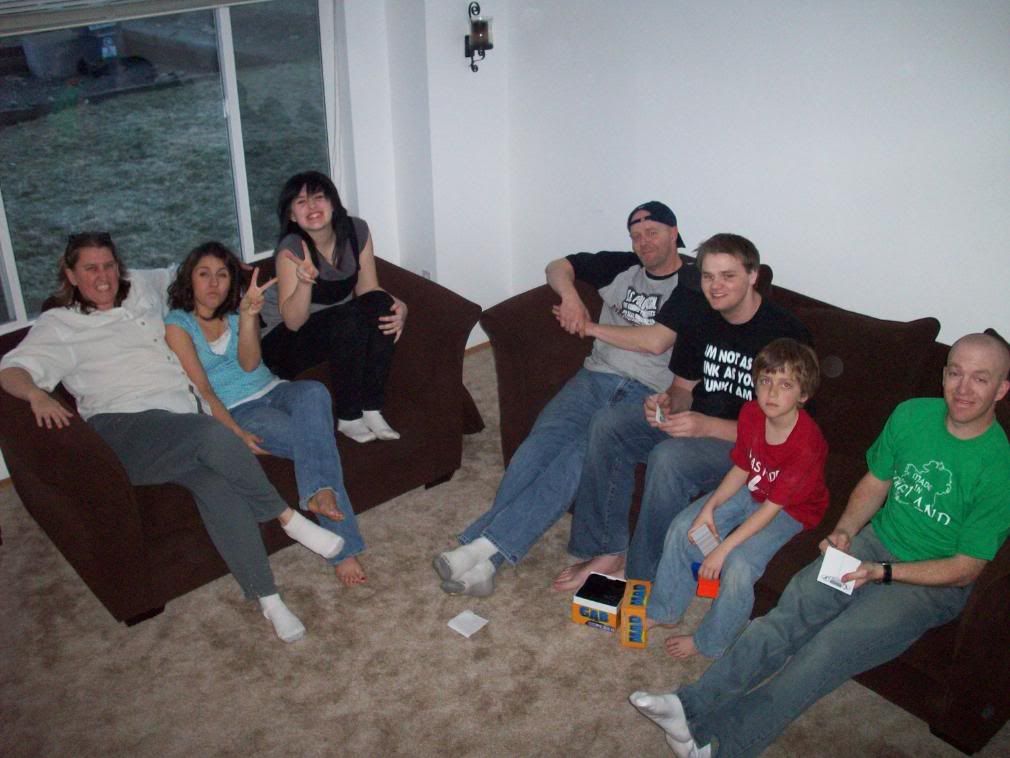
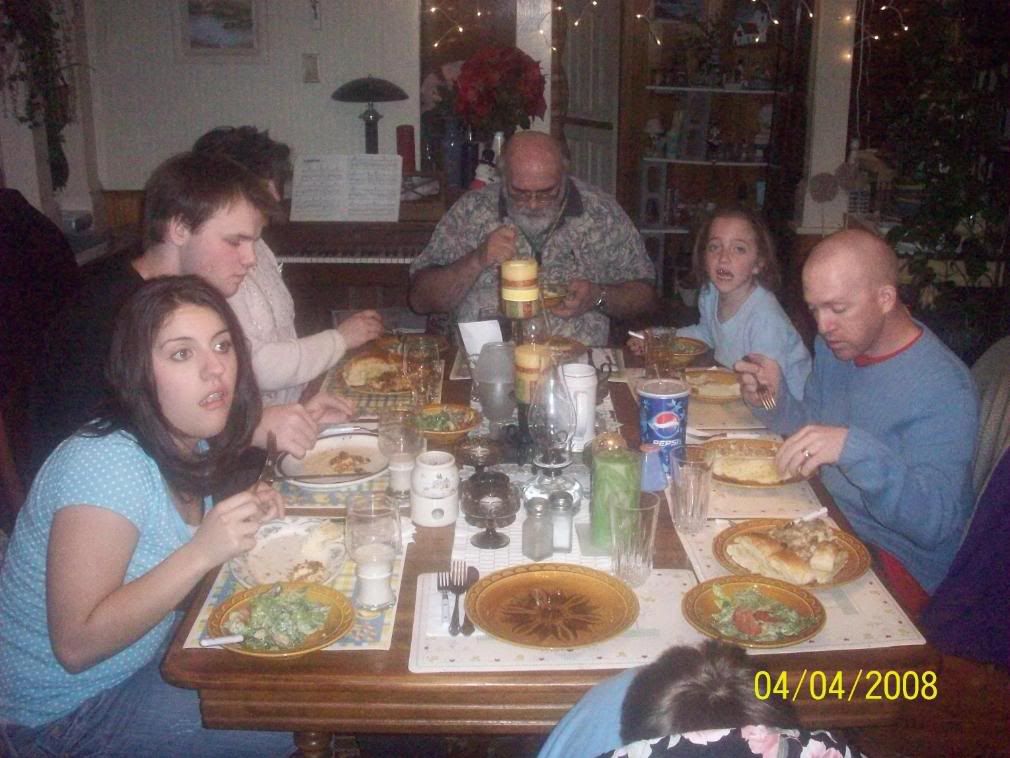
I picked up daddy from the airport and he said he wanted to surprise the kids. I dropped him off down by our mailboxes and I came into the house like I was just out shopping. The doorbell rang and my son answered the door. Daddy was there and my son was in shock. My sons face was priceless. The kids hugged and kissed daddy and my son said he was never letting go. lol and he meant it. He held unto my hubby's neck forever. The kids were so happy to see daddy. It was awesome seeing their little faces light up. So after a few days of just being family we had my sisters family over for a lasagna dinner. It just happen to also be their 18 year anniversary. Can you imagine 18 years together-AWESOME! After finishing up with dinner we all sat down for a fun game of mad gabs. It was boys against girls and I am happy to say that the girls won. Mad gabs is def a fun game to play when you have a big group of people together. And with an aussie and southerner listening to them say the sentences has us rolling on the floor laughing. I love playing that game. Here is a brief descraipiton of the game: It's the game that has everyone speaking a strange language called Mad Gab! Read a group of simple words aloud, like "Yore Luke Ink Hood". Did you "hear" the answer? Try saying them again. Sound familiar? Quick, the timer's ticking! Did you hear yourself say "You're Looking Good"? You and your teammates have two minutes to sound out three puzzles. The faster you guess, the more you score! Enjoy the new bonus score feature; guess all three puzzles, and earn bonus points, as indicated by the timer. Miss a card and the other team can steal the point!OK, the timer is set, the card flipper is loaded and everyone's ready for a laugh riot! Just remember: when it comes to scoring points, it's not what you say, it's what you hear! We had a blast with my sisters family over for dinner and game. I sure do miss those nights. 


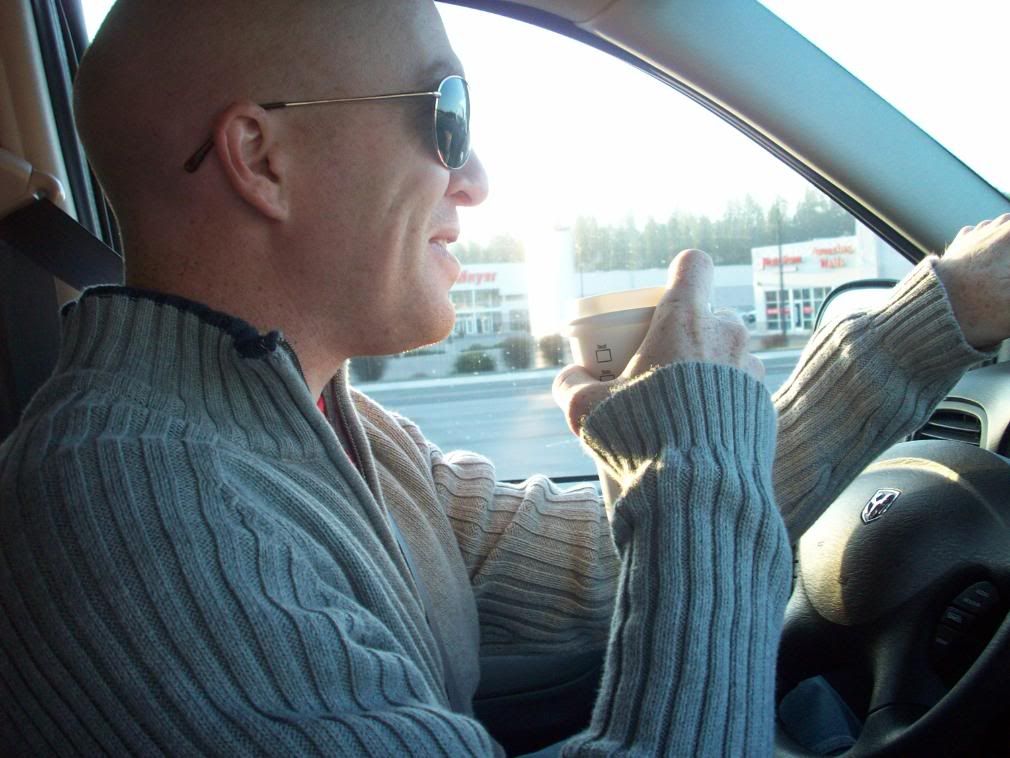
So bright an early the next day we headed off to my mothers house. We rented a dogde caravan for a week and had it all loaded. Everyone woke up and piled into the van. Our first stop[[of course]] was Starbucks. Here is a picture of hubby's and I very first coffee together EVER! I was so excited. Instead of just ordering one coffee for me he ordered two of them.....it was music to my ears. I wasn't sure he was really drinking coffee yet but I was after seeing him down his caramel latte =) I don't know why this made me so happy. I guess because we are sharing something together. Anyway that is the picture of our very first coffee together, I even have it on our fridge. LOL. Babe I can't wait to have another coffee with you when you get home.
 

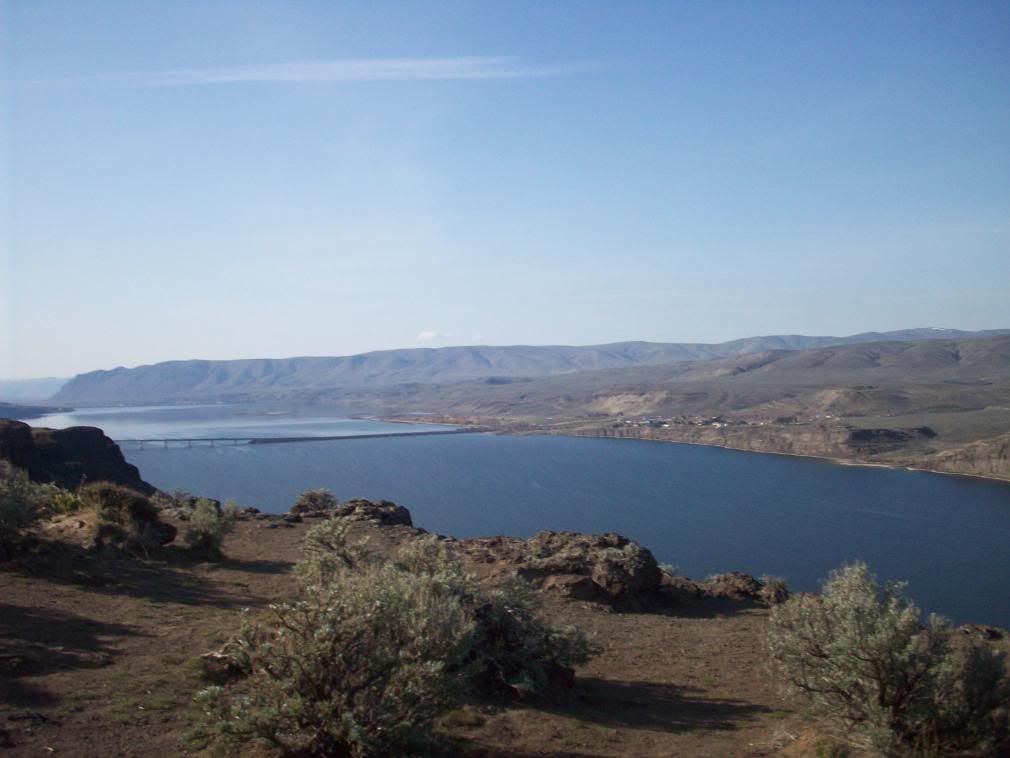
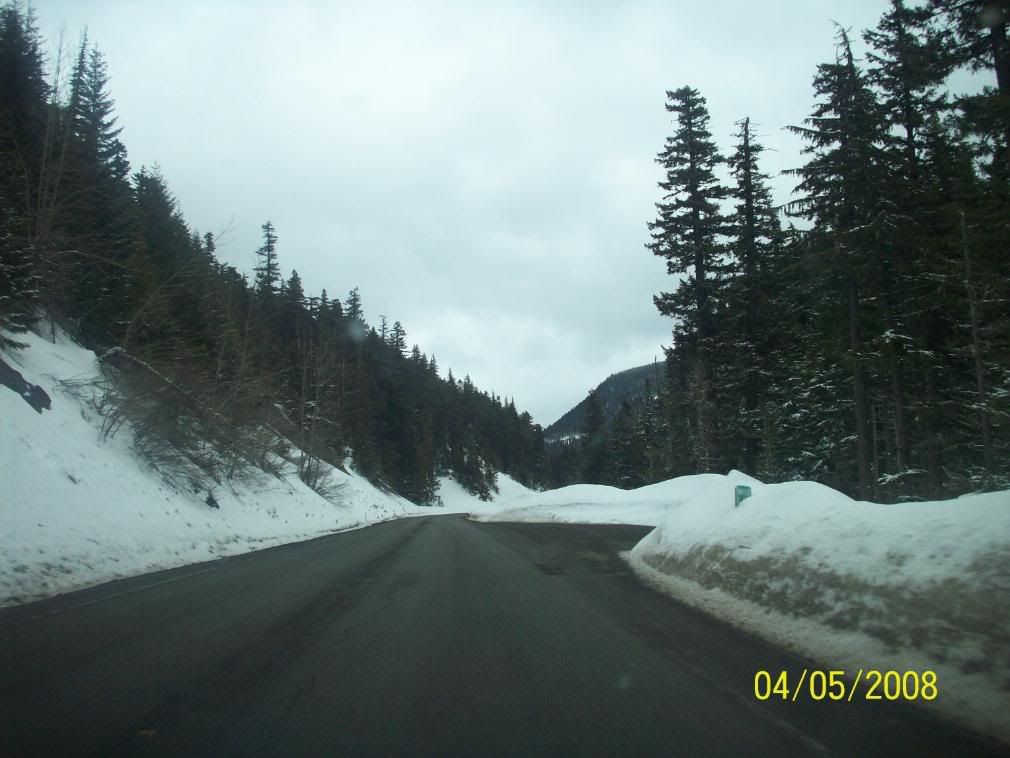
Along the way to my moms we made a few pit stops. Since we were driving the White Pass way this time we stopped off at a gorgeous view of the Columbia River[[AMAZING]] I am not sure what this pit stop was called but the views were breath taking and of course I snapped a ton of pictures. Here is one from almost the edge of the mountain. There were informational stones of how the water craved this and what it was used for. The kids loved it. It totally made me think that this is a very small version of what the Grand Canyon might look like. And makes me want to go to see the Grand Canyons even more now.-----Can you say ROAD TRIP! After pit stopping here we just sorta had a boring drive through dessert and Yakima. But once we got through Yakima we entered White Pass and OMG can you say amazing. This was not my first time driving through this because as kid we would drive from Spokane to Tacoma to see my grandparents. But I don't ever remember being awake to see White Pass before. So both my husband and I were like OMG this is gorgeous. And right than and there we decided road trips to grandma's house will be driven through White Pass only, even if it takes a few hours longer to get their. It is so worth it! Half of the river was still frozen and there was still a ton of snow in the pass. It was so breath taking. I has wished some of the view stops were open. Most of them were snowed in so we could not stop to take pictures. I took most of the pictures right from my seat in the van. My husbands camera takes the most amazing pictures.


Finally got to my mother's house. It was a very long day in the van with all the kids and our daughters boyfriend from Australia. But we settled into bed and woke up the next day to head out to Long Beach. Long Beach Peninsula is aptly named, for at 28 miles, it is the longest natural beach in the United States. 

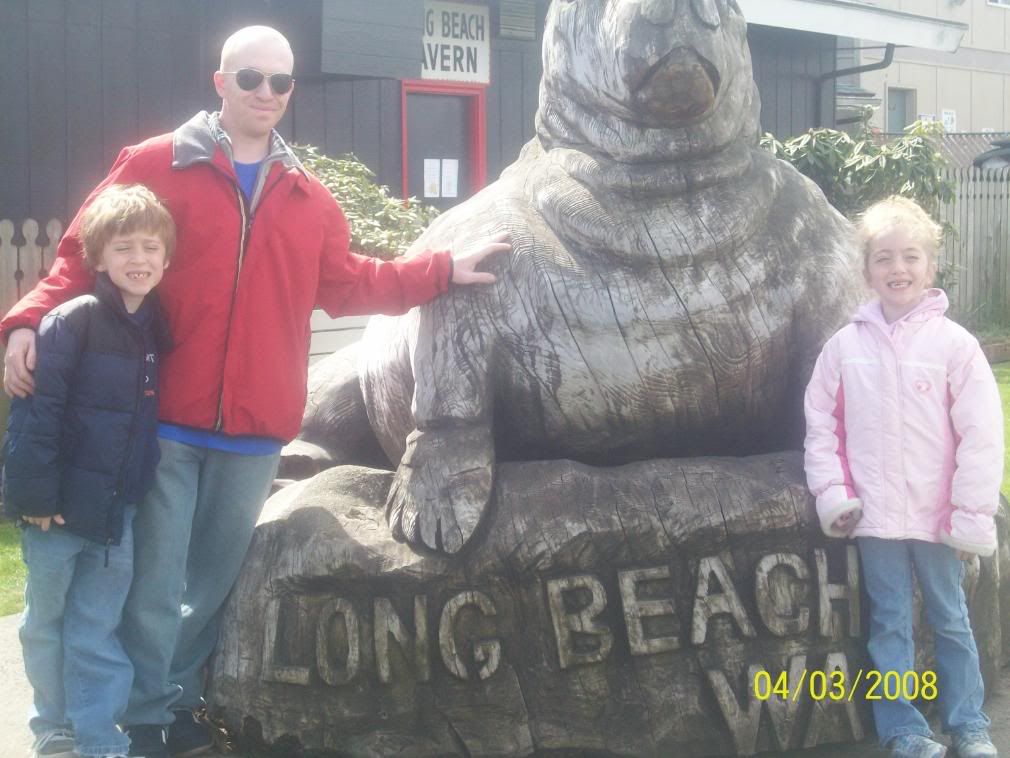
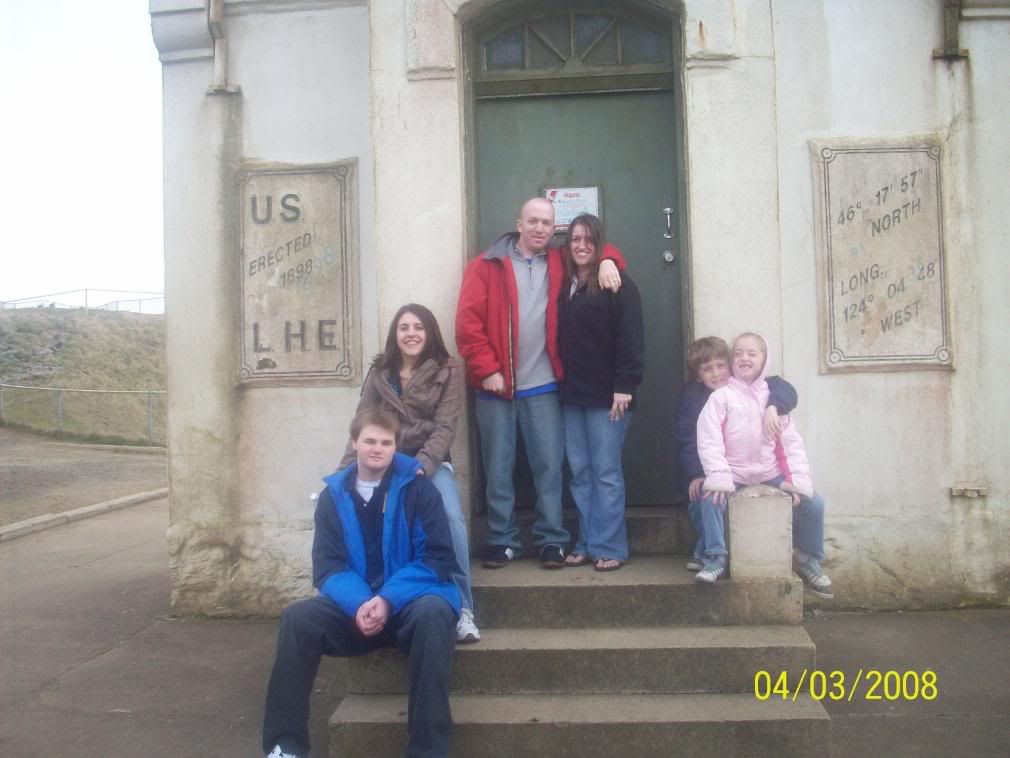
Since Brett[[Miranda's boyfriend]] has not seen our wonderful beaches we thought Long beach would be the best one to show him. And it just happen to be an ok day to take him. We stopped off at the Light House Inn for lunch. Walked the boardwalk, which is a long stretch that follows the beach. Got into the town and did all the touristy things. Of course we had to buy SALT WATER TAFFY. That is always a must for our family. If at Long beach you have to buy taffy. It is so good! And for all of you that ever get stationed at Ft.Lewis this is a MUST see while living here. The beaches are amazing. After Long Beach we went to Cape Disappointment Light House. It was so beautiful. I took tons of pictures. Cape Disappointment is a large headland forming the northern portion of the mouth of the Columbia River, as it opens to the Pacific Ocean. Most members of the Corps of Discovery arrived in this area where they were first able to glimpse the ocean on November 15, 1805, and set up a base camp near Chinook Point.
 

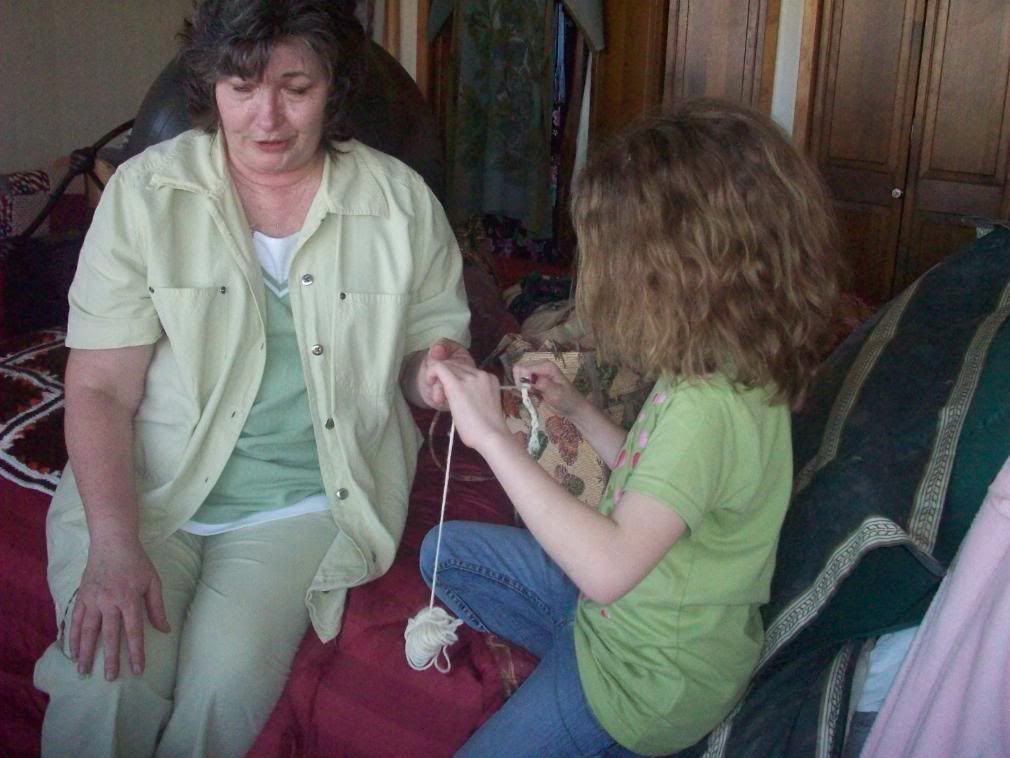
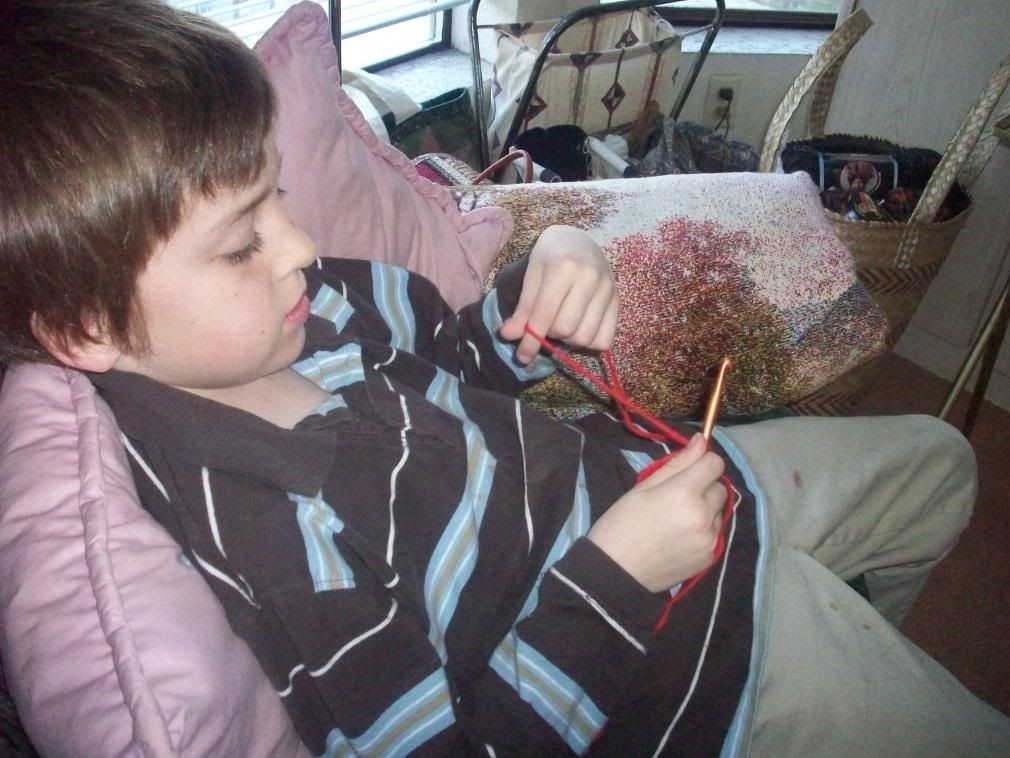
Spent the next few days spending it with the grandparents. Grandma showed the kids how to crotchet, my son was getting frustrated because he could not get the hang of it but he refused to give up and kept trying until he got it. Grandma thought this would be a good outlet to help them stay relaxed and calm. Plus they could learn how to make a few things for themselves like hats and scarfs. Emmy tried but did not get the hang of it. But it is ok because we will be traveling over the mountain this summer quite a few times and the kids can practice with grandma. He was very determined to learn this. My mom a nice goodbye dinner for us. The night before we left grandma's she made a very nice dinner. And bright and early the next day before we left for our long drive home grandpa got up early and made the kids home made elephant ears. They were so yummy. It is something I am going to start doing every Sunday for the kids. Make them elephant ears. Thanks dad it is a new family tradition I am starting.
 

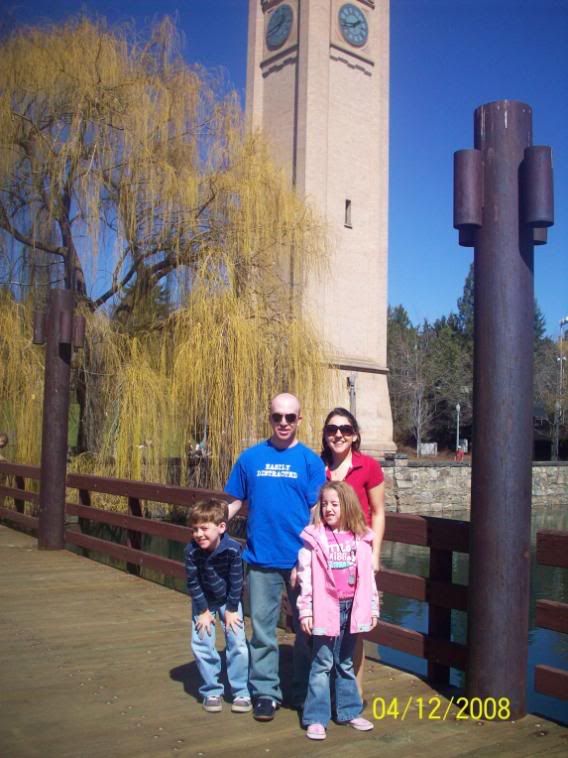
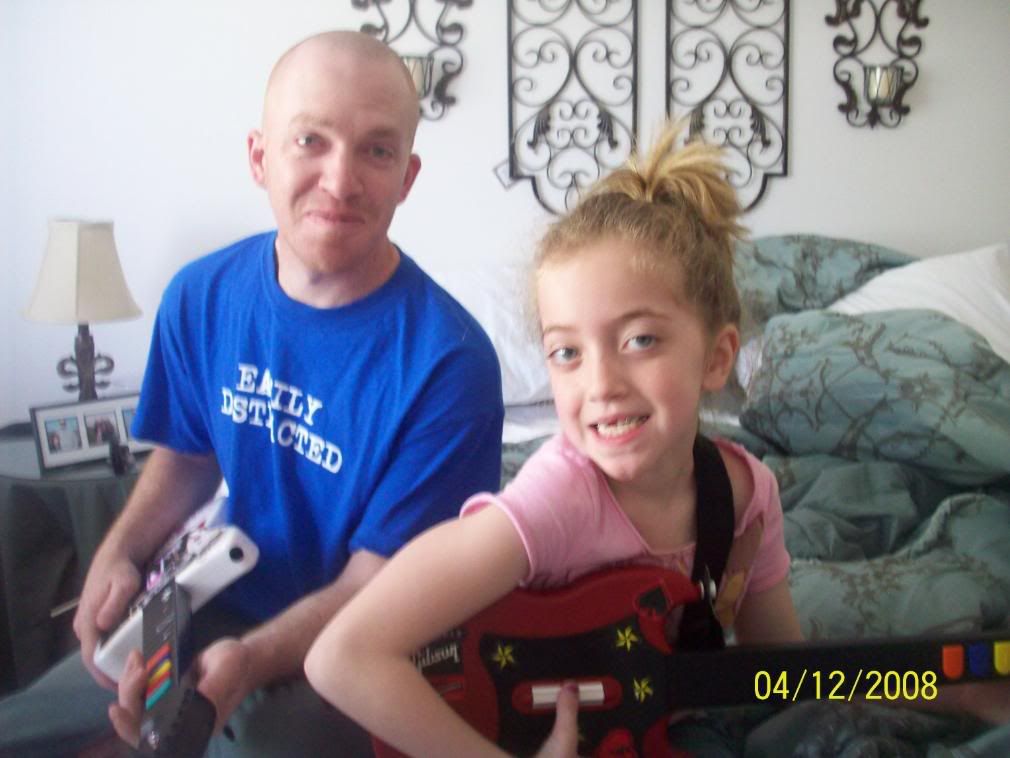
The trip was just as beautiful as the one there. I snapped a ton more pictures of the mountains and water. That way when daddy got back to Iraq he would have hundreds of pictures of Wa to look at and remember. All he has to look at in Iraq is SAND SAND SAND. All those pictures should help keep his spirits up till he makes it home. We took the kids bowling. We spent the entire day at River Front here in Spokane. It was one of the best family days ever. The kids had blast and mommy and daddy had a blast too. We rode the train. The merry go round. Watched an IMAX movie about the Alps. Rode some carnival rides. Ate lunch at the Olive Garden. Walked over and saw the water fall. It was so gorgeous. Spent time playing guitar hero with daddy. Even though he never did get the hang of using the guitar. He would use the controller. But never the less we had a blast playing it as a family. And daddy and I beat guitar hero3 on co-op. And babe I still have not beaten any of those songs solo. I need you here to help me. LOL. Before daddy left we bought the kids a wii. So of course we had fun playing bowling. We love to bowl and well swinging our arms on the wii was a BLAST. Babe I am getting better at it so watch out. When you get home I will out bowl you on the wii-woohoo!
 

So now daddy is gone. Has made it back to hell. Still has 11 months to go before he gets out. And babe you are getting OUT. Your life is the most important thing to me. So no more Army and no more DEPLOYMENTS. We love and miss you daddy so much. We can't wait for you to come home. We will be thinking about you always and we will be counting the days until you come home. Stay safe and keep your head down. Love always and forever plus one day.

Loves and Hugs-Bree

posted by Bree
Read more

Wednesday, April 16, 2008

Growing Concerns with Readiness of U.S. Military Land Forces

Growing concerns with the U.S. having enough Army and Marine Corps land forces to react to potential unforeseen crises overseas are drawing attention on Capitol Hill.

The concerns come as lawmakers craft fiscal 2009 defense bills and eye post-Bush administration budget-making, keeping in mind the looming potential for a significant number of troops operating in Iraq for years to come and the strain that deployments so far have placed on the volunteer U.S. military.

"We have had 12 military contingencies in the last 31 years, some of them major and most of them unexpected," House Armed Services Committee (HASC) Chairman Ike Skelton (D-Mo.) said at a recent hearing.

"We must have a trained and properly equipped force ready to handle whatever comes. But my strong concern is that our readiness shortfalls and the limitations on our ability to deploy trained and ready ground forces have reached a point where these services would have a very steep uphill climb with increased casualties to respond effectively to an emerging contingency," Skelton said.

Skelton made the remarks at an April 9 hearing with the four-star vice chiefs of the Army and Marines, both of whom admitted that they were not satisfied with their respective service's so-called strategic depth to respond to crisis scenarios like the post-9/11 invasion of Afghanistan.

Army Gen. Richard Cody testified that the Army remains "out of balance," repeating what has become a common official Army phrase referring to the need to recruit, station, train and equip soldiers for more than just counterinsurgency operations.

"The current demand for our forces in Iraq and Afghanistan exceeds the sustainable supply and limits our ability to provide ready forces for other contingencies," Cody said.

"Overall, our readiness is being consumed as fast as we build it. If unaddressed, this lack of balance poses a significant risk to the all-volunteer force and degrades the Army's ability to make a timely response to other contingencies," the Army vice chief said.

read more at Military.com

Read more

Soldier took his wife's place in Iraq and was KIA

A Virginia National Guardsman who re-enlisted so his wife, also a member of the National Guard, wouldn't have to go back to Iraq was killed April 16 when his vehicle struck a roadside bomb south of Baghdad.

Staff Sgt. Jesse Ault of Dublin in Pulaski County was 28. He was serving with E Company in the 429th Brigade Support Battalion out of Roanoke.

A native of Wheeling, W.Va., who grew up in Middlebourne, W.Va., Ault joined the U.S. Army while still in high school and joined the National Guard after moving to Virginia.

Yesterday, his wife, Betsy Ault, said she and her husband were dating in 2004 when their unit was deployed to Balad, Iraq. They returned to Virginia and married, she said, and her husband was "100 percent family," relishing time spent playing with her son, Nathan, 10, and their toddler, Adam, 1. He was so devoted to the family, she said, that he decided to take her place after her unit was told it was being sent to Iraq.

"Jesse separated from the Guard after the deployment [to Iraq], but I was still serving when my unit was alerted early 2007," she said. "Jesse loved our family so much and saw how important it was for me to stay with my sons, he joined the National Guard again to take my place on the deployment.

read more at Military.com

Read more

Sgt Ronn Cantu - Vocal War Critic - Promoted !

Sgt. Ronn Cantu -- one of the leading voices of dissent inside the U.S. Army -- has been promoted to staff sergeant.

Cantu had signed a petition to Congress demanding that the U.S. withdraw from Iraq, and he gave interviews to the news shows "60 Minutes" and "Democracy Now!," as well as to IPS, detailing his opposition. Some observers say Cantu's promotion shows that the military is now so stressed by the ongoing war that it is finding it difficult to crack down on dissent within the ranks.

Few members of the Armed Forces have made their disgust for the war in Iraq more public than Cantu. The 30-year-old Los Angeles native began speaking out during his second tour in Iraq, launching an online forum for anti-war GIs at Soldiersvoices.net, signing petitions against the war and giving interviews to major U.S. media outlets while still stationed in Baghdad.

Now, as a staff sergeant, Cantu said he'll teach the Soldiers under him to follow the Geneva Conventions and other laws of war.

"There's a lot of Soldiers out there who wouldn't recognize an unlawful order if it bit them on the behind," he said. "So I'm going to make sure the nine guys under me are very aware of the laws of armed conflict. I just want to make sure that they keep their ethics and moral standards and keep out of trouble should anything happen."

Cantu added that he hopes the Soldiers under his command will behave differently than his unit did during his first tour in Iraq.

"We had a policy of 'making a statement,'" he said. "If a bomb went off on our convoy, all of the guns would go off and we'd pretty much just pass punishment on the area we were in: windows, cars on the side of the road, farm animals, sheep. It was a revenge thing."

Most service members who speak out are not given the same treatment that Ronn Cantu is enjoying. Like Cantu, Former Marine Corps Sgt. Liam Madden signed the Appeal for Redress, an online petition to Congress from active-duty service members demanding an immediate withdrawal of all U.S. troops from Iraq.

After co-founding the appeal, Madden began holding workshops about the politics of the war on his base at Quantico, Va., bringing down the wrath of his chain of command.

"Basically, they just gave me lousy jobs and told all my peers they were not allowed to talk to Sergeant Madden," he said. "It was a pretty lonely time."

"All the peers that I had met and become acquainted with were basically shut off and if any of them were to talk with me in the barracks or off duty, they were very nervous about it," he added.

Many observers believe the Army is unable to effectively punish Soldiers such as Cantu and Madden because it's close to its breaking point. Last month, top Army officials told the Senate Armed Services Committee that it is under serious strain and must reduce the length of combat tours as soon as possible.

Gen. George Casey, the Army Chief of Staff, said, "The cumulative effects of the last six-plus years at war have left our Army out of balance."

read more at Military.com


Read more

Monday, April 14, 2008

General Petraeus testimony; 8 in our Sgt H. Styker Brigade killed in Iraq; An Irresponsible Plan

Dear Readers, those of you who have been following along since 2003, the saga in our military family, know that my daughter's husband is in his second deployment to Iraq. He left for Iraq in Dec 07, and since only December, eight in his brigade have been killed in Iraq.

I'd say the violence in Iraq is in no way on the decline, and clearly the Surge is not clearing up the violence. You heard of the recent attacks on the 'safe' Green Zone in Baghdad and the attack on Basra even while General Petraeus was giving his testimony to Congress last week? My son-in-law was on convoy two weeks ago when an IED exploded near his vehicle - violence already was escalating.

Military peacekeeping is not keeping the peace. That should come as no surprise, since the military are not peacekeepers. Lacking a vigorous diplomatic process in Iraq, it is similarly not surprising that reconciliation is making seemingly little progress. But what remains a constant is that our troops continue to be killed or so devastatingly wounded as to be unable to return to anything resembling normalcy.

And of course,even while our troops die or are damaged, it goes without saying that the daily carnage of Iraqi lives snuffed out continues. Sunni, Shiite, Kurd - under the umbrella of Iraq, a nation forced into democracy whether they want it or not - it is nonetheless Iraqi lives by the tens and hundreds daily that are snuffed out in Iraq.

As our military is squandered mercilessly in the 'mission accomplished' in Iraq, trouble is brewing in Afghanistan along the Pakistan border. As pointed out by more than one Senator at the Petraeus testimony last week,Iraq welcomes Iran emmissary, knowing Iran is a dangerous neighbor to be respected and in close proximity, while the President of the United States seems only to be able to sneak into Iraq for tenative visits, under cover of night and certainly with little welcome fanfare. This Administration has the audacity to believe it can navigate and mitigate with a simplistic cowboy mentality the complex relationships in the countries that make up the Middle East.

But General Petraeus did define his sense of our military mission in Iraq = 'for our national security interests of economic stability in the region'. Read that again - security interests of economic stablity means what? Did you guess oil? Their oil, our economic stability.

While General Petraeus is trying to define for Congress the impossible - stating the ever changing mission in Iraq, Admiral Mullen recently 'retired' after making it known to the President that he would not lead an invasion into Iran. Earlier there was the retirement of General Casey whom General Petraeus replaced after General Casey began to hint that the impossible mission in Iraq was depleting our U.S. military beyond it's limits.

Even while General Petraeus was giving his testimony to the Senate last Tuesday, Basra was under attack. In a telling message that would be wise to heed, note that 1,000 trained Iraqi military and police personnel abandoned their stations in recent attacks, some even turning over U.S. provided vehicles and weapons to the attackers. I can't help but wonder what that does to the U.S. troops that General Petraeus says are serving more in advisory roles than carrying out the military maneuvers. I'd say it leaves the U.S. troops to be unnecessary and handy targets, subject to their very own equipment and weapons being used against them.

This isn't the first time the 'trained' Iraqi military and/or police have fled. Do you remember hearing the news in 2005 and 2006 that there were six Iraqi battalions trained and ready, and then we heard, no make that four, no make that two, no make that none.

There is a pattern to my mind that is a telling message. It does not matter how long U.S. troops remain in Iraq, pulling them out now, 5 years, 10 years, or even 100 years from now, the pattern of the culture of what comprises the Iraqi nation was long habitual before this country and it's democracy was even a glint or hint of an idea.

I would further remind readers that our military demands of an 18 year old in the United States, fresh out of high school, that he or she be trained and ready for combat in Iraq in 6-8 weeks, depending on branch of military service. I would think it reasonable to expect no less of Iraqis training for military, and certainly five years is an adequate time. It does seem the Iraqi message is not unclear to the U.S. forces - we are not a welcome or wanted presence there and our young service men and women are dying from our continuing to ignore the message. Ignorance is NOT bliss, my friends.

Even if it isn't directly impacting you with loved ones deployed, it is costing you a robust economy in your homeland, and it is costing you the loss of a valuable commodity in having a well-trained military, at the ready and able to defend your homeland. It is not a good idea to deplete and exhaust the only military we have when we have potential threats in more than one direction.

This all-volunteer military has been pushed beyond exhaustion, with repeat deployments in futile combat in a now sovereign nation intent on building it's own nation the way it sees fit, and if that includes civil war between factions, so be it. Who told the U.S. it could not have a civil war at a time when we were defining our own sovereign nation?

This morning I read a brief article online from a Middle East publication that indicates that Prime Minister Malaki is turning out to be a worse dictator than Saddam Hussein, and has killed more of his own people in his short rule than in ten years of Saddam in power. I can't say if that is or isn't true, and may be it is propaganda, but it is getting difficult to sort through all the propaganda, since that seems to be mostly what we get here in the U.S. as well. What is truth on the ground in Iraq - as I understand it, we have no media reporters in Iraq to give us up close reporting.

As the mission in Iraq has changed and evolved much since the 2003 invasion, and the declared mission accomplished, the talking points have evolved little and remain grounded in the concept of fighting them there so we don't have to fight them here. And most recently the added pride factor of 'victory' - undefined, but we are to have victory nonetheless. How smart is that strategy - an undefined and impermeable victory undefined by the basic whom, when, what, how, why questions?

Meanwhile, Presidential contender, a military man himself, Senator John McCain doesn't seem to be sure where Al Quaeda is -- where the 'terrorists' are which instills in me no comfort that our troops are fighting them there so they don't have to fight them here, and assuredly no comfort that said troops should be led by another Commander-in-Chief who does not have a basis in the reality of what or who is the enemy or why they are an enemy, much less where they are in the Middle East.

Think about that for a moment though,if 'they' (terrorists) did come here, we have no ready troops to be fighting them here, and if we use up, exhaust and deplete our troops over there (which we have pretty much done already) so we don't have to fight them here, what do we do when there are no U.S. troops left to fight them over there and 'they' (the terrorists), which continue to reconstitute, are still out there. It is not a well reasoned thought process. I appreciated how Senator Obama attempted to ask General Petraeus what would constitute a satisfactory resolution - (paraphrasing here) -- what would be the defining meaning of victory - when there are no more terrorists left or x number of terrorist left? What if, although acknowledging it is messy now, if where we are at now with Iraq, is victory - would we know it if we saw it?

This week Congress will be voting on whether to give President Bush another round of huge millions to sustain our troops in Iraq. This back door budget of asking for a supplemental budget for the 'sake of our troops' is a political maneuver, not unfamiliar to our Congress. Since General Petraeus has done his duty and given his report to Congress with two days of testimony last week, now it falls to Congress to do their job and make decisions on what General Petraeus had to report. Is there strong enough reason to continue to keep our troops in Iraq? Is there strong enough reason to employ another strategy, bring them home and rather than fear the worst in Iraq, give them (Iraq) the opportunity they have asked for to work it out themselves.
We well know that the President has made his decision to continue to keep troops in Iraq with no changes in the Iraq war, to dump this live war into the next President's lap; and should that future President pull troops out with all the touted catastrophic results come to pass, it would be blame for the next President and his/her party.

There are two things wrong with that reasoning:

1) It assumes there would be catastrophic results, which, as of yet, no one seems able to define for me - what that means - what exactly would be catastrophic or what would that look like and how would it be different than what is already catastrophic genocide in Iraq because of U.S. actions to invade and occupy?

2) Is partisan politics more relevant and important than the lives and dollars it is costing to keep us in Iraq? I don't give a hang about supposedly 'smart political strategies or tactics' , as thus far those citing them as smart don't seem to know just how smart or flat out dumb said strategies and tactics are. So far the strategies and tactics used by either party have served only to perpetuate the war in Iraq. I care deeply about the politicians we elect and paydoing the jobs we entrust them to do - especiallywith the treasure and lives of our young.

Locally, here in Washington, a contender for U.S. Representative in 8th District, Darcy Burner, has come up with what she terms a responsible plan for getting troops out of Iraq. I had the opportunity to read it the day before it was published online to her website. This plan was put together with the help and advice of General Paul Eaton, and General Wesley Clark,and it is responsible - no question about that ... a responsible way to keep the war ongoing in Iraq until specifications cited in the plan have been met and no timeline or deadline has been set in the plan as to when the troops could come home.

I'm not so sure who it is responsible to, but it does seem to be a moral imperative to repair some of the damage done by sending U.S. troops into Iraq. I'm not sure it is the military troops who need now to do nation building, but yes, we do have some moral imperatives to rectify the damage - just not sure why or even if it is the troops who have the responsibility.

For us, for our family, for our daughter and grandchildren and for our son in law, Sgt H.,home on leave and returning to Iraq to finish out his second extended, stop loss deployment,right to that 'hot spot' that is occurring now in Bagdhad area, this plan is no more responsible than any other plan that has been put forth to date inasmuch as it seems just more political posturing using the excuse of the Iraq war.

And closer to home, in our own 19th LD, our own U.S. Congressman Brian Baird, decided to support the Surge last summer,and when my husband asked him face to face, man to man, if our son's life was worth it, Congressman Baird, said that while we might not like his answer, 'yes, he did believe our son's life was worth it'. (In fairness, he added that he would give his life for it and that of his two sons -- who are only 2 yrs old).

I wonder if Congressman Baird is considering the lives lost since he made that statement to us. And I would call to his attention that eight (8) from our son-in-law's Stryker Brigade have been killed in Iraq since son-in-law deployed to Iraq in December 07. We do pray earnestly that Baird's faith in this surge and in a U.S. committment to remain in Iraq will not be at the expense of our son's life. We assuredly wouldn't want it to be at the expense of his own sons' lives.

This month, April, our two U.S. Senators and our U.S. Representatives will have an opportunity to do the right thing, the courageous thing, an action of valor, and end this war right now. They can vote no to a supplemental budget to spend more money to keep our troops in Iraq. Our son-in-law along with all the troops have done their jobs, General Petraeus has done his, and the Commander-in-Chief has spoken his intent to continue as is the war in Iraq.

And now, once again, Congress has the opportunity to do it's job, to do the right thing, to make the decision that will bring and end to the war in Iraq now. General Petraeus is not in command of Congress and can only make recommendations. President Bush is not in command of Congress and has made his recommendations. Congress can now be in command ofitself and step up to the plate with this vote. To do less is to abdicate the responsibilities towhich they were elected .. it's been five years, and this argument takes on new meaning after five years in light of the cost of lives, dollars and the fate of our depleted military to our national security interests.

I am told that there does remain funds already in the pipeline to get the troops out of Iraq - responsibly. Voting no on the supplemental permits that already established pipeline money to go to work to get the troops out and bring them home Now. Bringing the troops home now IS the responsible thing to do.
Read more

Hydrangea

Hydrangea

Dahlia

Dahlia

spring color bowl

spring color bowl

  © Blog Design by Simply Fabulous Blogger Templates

Back to TOP